
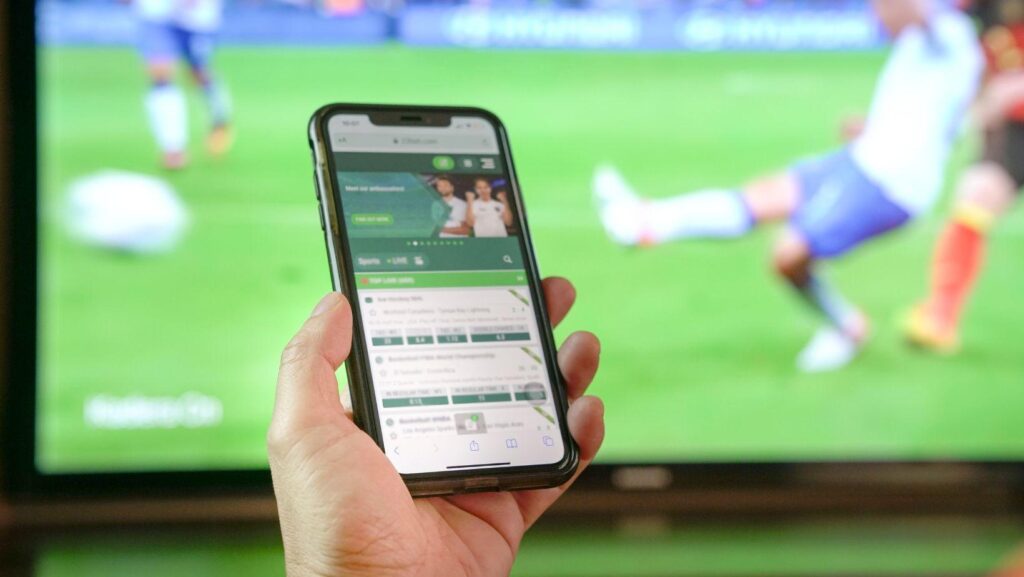
You’ve spent months sharpening your edge on a sportsbook. You read lines, you track value, you’ve learned not to bet the chalk just because everyone else is. Then you open a pokie on the same app, carry that exact same analytical energy into the session, and walk away confused about why nothing clicked.
That’s not bad luck. That’s a brain using the wrong operating system.
Sports betting on mobile trains you to treat every outcome as a signal. A line moves. It means something. A team’s recent results shift the probability. You update your model. Every piece of information is potentially useful, so you’re wired to keep processing. That hypervigilance is an asset on a sportsbook. When you carry it into online pokies, it turns into noise. You start hunting patterns in an RNG. You anchor on three dead spins and decide the game is cold. You chase a losing session because your sportsbook brain says the variance will correct. The first practical reset is choosing games that reward patience over impulse; the best online pokies are built around RTP and volatility profiles, not the adrenaline loop mobile sportsbooks engineer.
The Sportsbook Brain Is a Pattern-Seeking Machine
Here’s what mobile betting apps actually do to your cognition over time. Research published in Scientific American documents how real-time data feeds, push notifications, and in-play cash-out prompts are deliberately designed to keep users in a state of active, reactive decision-making. The app needs you scanning. The second you go passive, you close it.
That’s the commercial incentive baked into the interface design. After a few months of daily use, the pattern-detection reflex isn’t voluntary anymore. It’s automatic.
Now open a 5-reel video pokie. The RNG doesn’t care what happened on the last 40 spins. No line has moved. No injury report changes the probability of a scatter landing. The outcome of each spin is statistically independent from every spin before it. That’s not a disclaimer, it’s the literal mechanical reality of how the software works. But your brain, conditioned by the sportsbook, refuses to accept that. It keeps looking for a signal that isn’t there.
This is where recreational players blow their bankroll. Not on one catastrophic decision, but on dozens of small ones. Each individually reasonable to a sports-betting brain, each categorically wrong for a pokie session.
Anchoring Is Useful in Betting, Toxic in Pokies
Anchoring bias shows up differently depending on the game. In sports betting, it’s a known trap: you see an opening line of -110 on the Packers, the line moves to -130, and you anchor on the original number to justify a bet you shouldn’t be taking. Good bettors learn to catch this.
In pokies, anchoring looks different. You buy 80 spins on a 96.1% RTP game and hit nothing meaningful. Forty spins in, you’re down two buy-ins. The sportsbook reflex says: you’re due. The game owes you. The variance has to correct.
It doesn’t. It genuinely doesn’t.
RTP on a pokie slot is calculated across millions of spins. Not across your session, not across your afternoon, and definitely not across the 40 spins you’ve personally played this hour. A 2024 Frontiers in Psychiatry study using neuroimaging found that smartphone users with high habitual engagement showed measurably impaired decision-making specifically in ambiguous, risk-reward scenarios. A pokie session. Where outcomes look meaningful but are statistically random. Is exactly that kind of scenario.
The mobile sportsbook habit doesn’t just carry the wrong strategy into pokies. It actively degrades the cognitive tools you’d need to play them well.
Volatility Profiles Exist for a Reason. Use Them
Most mobile bettors know what a line implies about probability. Fewer know what a volatility rating actually tells you about a pokie.
High-volatility slots pay infrequently but significantly when they hit. Low-volatility slots pay smaller amounts more consistently. Medium-volatility sits in between, which usually means a smoother session but with a lower ceiling on any single win.
For a sports bettor migrating to pokies, the instinct is always to grab the high-volatility game. Bigger wins. More exciting. The problem is that high-volatility slots require a bankroll that can absorb extended cold streaks. We’re talking 200 to 400 spins with little or nothing before a significant hit comes through. If you’re playing with the same session mentality you bring to a parlay. Stake, result, reassess. You’ll burn through your buy-in long before the variance has a chance to break your way.
Medium or low-volatility games are genuinely the better starting point for anyone coming from a sportsbook background. Not because they’re more exciting. Because they let you extend your session length, observe the game mechanics without pressure, and develop a feel for how the bonus triggers actually work. Before you’re playing for meaningful money.
The Gowin18 Australia review on this site covers a platform that lists volatility ratings alongside each pokie, which is more useful than it sounds when you’re trying to match a game to your bankroll. You can also read how platform design impacts slot gaming engagement for a breakdown of how game interfaces nudge your behavior without you realizing it. Relevant reading if you’re already suspicious that the app is working against your judgment.
The Live-Betting Loop Is the Hardest Habit to Break
In-play betting is the most cognitively demanding thing you can do on a mobile sportsbook. Odds shift in real time. You have seconds to decide. The app buzzes with opportunities. Every cash-out prompt is a micro-decision with actual stakes.
That intensity becomes addictive in a specific way. Not addictive in the clinical sense necessarily, but habituating. Your baseline for what constitutes an acceptable level of stimulation rises. Sessions that don’t produce that level of stimulus start to feel slow, frustrating, boring.
Sit down with a medium-volatility pokie at 50 cents a spin and tell me how long before the sportsbook brain starts looking for an escape.
This is the real reason pokies feel wrong to sports bettors at first. Not because the games are bad. Because the games don’t provide the reactive feedback loop the brain has been trained to expect. The solution isn’t to find higher-volatility pokies to approximate that feeling. That’s chasing the wrong stimulus. The solution is to deliberately slow the session down. Set a spin speed you’re comfortable with. Pick a game with interesting bonus mechanics rather than just a high max win. Give the session a defined bankroll and a defined stopping point before you start, and actually stop when you hit it.
That’s the discipline sports bettors think they have. Most don’t, because the sportsbook was never designed to reward stopping.
What Actually Transfers. And What Doesn’t
Some skills do carry over. Bankroll management. Knowing how many units you have, what percentage of your session bankroll each spin represents, when a session is over. Transfers directly. If you’ve been playing sports betting with a staking plan, that thinking maps cleanly onto a pokie session.
Bonus evaluation also transfers, partly. Reading wagering requirements on a casino bonus isn’t that different from reading the terms on a sportsbook promotion. The math is more annoying, but the skepticism required is the same. A 40x wagering requirement on a $20 bonus means you’re spinning $800 worth before you can withdraw. Know that before you claim it.
What doesn’t transfer: using recent session results as information. On a sportsbook, a team’s last five results are data. In a pokie, your last 40 spins are noise. The moment you start treating spin history as signal, you’re gambling with the wrong brain.
FAQ
Does my sports betting experience help me play online pokies better?
Partly. Bankroll discipline and bonus-term skepticism transfer well. Pattern recognition and in-play instincts don’t. They’re actively counterproductive. Pokie outcomes are statistically independent of previous results, so any strategy built on recent session data is working with invented information rather than real signal.
What’s the difference between high and low volatility pokies?
High-volatility pokies pay less often but hit harder when they do. Low-volatility pokies pay smaller amounts more frequently, giving you a more consistent session. If you’re coming from sports betting with limited pokie experience, low or medium volatility is a safer starting point. Your bankroll lasts longer while you learn how the mechanics work.
Why do I feel bored playing pokies after in-play sports betting?
In-play betting conditions your brain to expect constant reactive decision-making. Pokies don’t provide that feedback loop, so sessions feel understimulating by comparison. That’s not a problem with the game. It’s withdrawal from the stimulus pattern mobile sportsbooks are specifically designed to create. Slowing your spin speed and setting firm session limits helps recalibrate that baseline.
How do I choose a pokie game without just guessing?
Check the RTP (anything above 96% is solid for regular play) and the volatility rating before you start. Some platforms list these directly on the game page. If they don’t, a quick search of the game title plus “RTP” will surface the provider’s published figures. Match the volatility to the session bankroll you can realistically afford. High volatility needs a long runway.
Should I use the same bankroll management rules from sports betting?
The principles apply: define your session bankroll before you start, know what each spin costs as a percentage of that bankroll, and set a stopping point. Where it differs is that pokies don’t have a halftime or a final whistle to anchor your session around. You have to create your own structure, and you have to commit to it before the session starts, not during it.
Play the Right Game, with the Right Brain
The mobile betting skills you’ve built are real. They just belong in a different context. Bringing a sportsbook mindset into a pokie session isn’t a minor mismatch. It’s using a hammer to drive a screw. The results look vaguely similar for about three seconds, and then something breaks.
Pick games based on RTP and volatility, not on how fast they spin or how big the jackpot graphic looks. Set your session bankroll before you open the app. Stop when you said you’d stop. That’s it. That’s the whole adjustment. It’s straightforward to understand and genuinely difficult to execute when your brain has been trained by six months of live in-play betting to never, ever stop watching.
Gambling involves risk. Play responsibly and only wager what you can afford to lose. If gambling is affecting you or someone you know, contact BeGambleAware.org or call 1-800-GAMBLER.